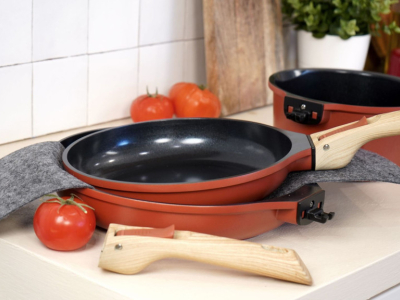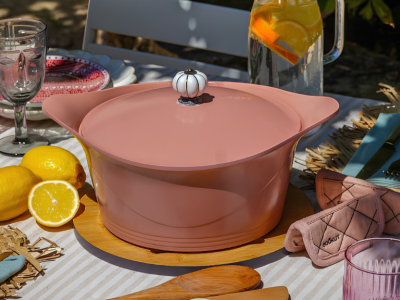







The trusty casserole dish is a stalwart of the kitchen. A master at simmering, braising, frying and roasting, its versatility is unmatched. What’s more, when looked after well, it can accompany you in the kitchen for a lifetime.
But if you’re in the market for a new casserole dish, the sheer volume of choice can feel overwhelming. From cast iron to stainless steel and ceramic, where do you start and which is the best one to choose?
Thankfully, Cookut has created this simple guide to help you compare and decide on the best casserole dish for your cooking style!
Understanding the different materials used for casseroles
The composition of a casserole dish and how it influences your cooking
First and foremost, you want to choose a casserole lining that promotes safe and healthy cooking. Look for casserole dishes that are PFAS-free.
How different casserole materials influence your cooking:
- A cast iron casserole retains heat for a long time
- A stainless steel casserole heats up quickly but doesn’t retain heat as well.
- Ceramic casserole dishes are a great choice for slow cooking and gently simmered dishes.
Durability and lifespan of a casserole
Is your casserole a friend for life? It certainly can be if it's well looked after!
Whether you choose cast iron, stainless steel or ceramic, understanding the best ways to clean and look after each material is the key to ensuring it’s your kitchen companions for years to come.
For example, cast iron requires a little extra care and is not dishwasher-safe. On the other hand, stainless steel and ceramic are dishwasher-friendly.
Best materials for a lightweight casserole dish
It’s also important to choose a casserole that’s compatible with your preferred cooking method at home.
For instance, cast iron and stainless steel casseroles are compatible with all types of hob, including induction.
Ceramic casserole dishes, on the other hand, don't work on induction, but are perfectly suited to the oven.
Casserole coatings and cooking compatibility
It’s also important to choose a casserole that’s compatible with your preferred cooking method at home.
For instance, cast iron and stainless steel casseroles are compatible with all types of hob, including induction.
Ceramic casserole dishes, on the other hand, don't work on induction, but are perfectly suited to the oven.
Cast iron casseroles
Cast iron is the classic casserole material which may take you back to the kitchens of your parents and grandparents! Renowned for its durability, it also cooks slowly and evenly thanks to its excellent heat distribution.
It works brilliantly for all dishes that require several hours' cooking: stews, hotpots, soups, etc.
Cast iron casseroles do need a little extra care though. They’re not suitable for dishwashers especially if they don’t have a non-stick coating. The best way to look after cast iron is to clean by hand.
Raw cast iron or enamelled cast iron casseroles: what are the differences?
If you’re set on a cast iron casserole, it’s important to know there are two types to choose from. Raw cast iron and enamelled cast iron.
Raw or natural cast iron has no coating and requires special care to prevent rusting. Once a casserole goes rusty it can’t be used as it’s not safe or healthy to cook with.
Cast iron is not dishwasher-safe. It’s best to wash it by hand with a soft sponge (the abrasive side can damage the coating). Be sure to dry your casserole thoroughly to keep rust at bay.
To keep your cast iron casserole in good shape, it’s a good idea to season it regularly. This means brushing the casserole with oil and heating it up. The process adds a protective layer on the cast iron to prevent rust spots and reinforce its non-stick properties.
Enamelled cast iron, on the other hand, requires less maintenance. Thanks to its enamel coating, it is non-stick. Just be careful of heavy impacts that could weaken or break it.
Cast iron casserole compatible with induction?
Yes, the cast iron casserole is compatible with all cooking methods, including induction hobs.
Advantages and disadvantages of cast iron casseroles
➡️ In summary, cast iron casseroles are:
- All-ring compatible
- Suitable for slow cooking with good heat retention and distribution
- Durable but heavy (can be difficult to handle)
- Not dishwasher safe. Hand washing and regular seasoning recommended
Stainless steel casseroles
Stainless steel casseroles are lightweight and easy to handle. Stainless steel is an excellent conductor of heat, and it doesn’t pose any health risks while cooking.
However, its lack of non-stick coating means you need to take extra care during cooking to make sure food doesn’t stick to the bottom.
Multi-layer stainless steel casserole: why is it important?
A single layer of stainless steel can create hot spots in certain areas, leading to deformation due to thermal shock.
This is why most stainless steel casseroles have 3 layers to increase their durability.
- The first stainless steel layer preserves the nutritional qualities of the food.
- The second layer is made of aluminium, renowned for its good conductivity, ensuring food heats up quickly and evenly.
- The third layer, made of stainless steel, is compatible with all cooking methods.
Advantages and disadvantages of stainless steel casseroles
➡️ In short, stainless steel casseroles are:
- Lightweight and easy to handle
- Perfect for searing and braising as they heat up quickly
- Suitable for all burners and dishwashers
- Not non-stick so require extra care when cooking food.
Ceramic casserole dishes
The ceramic casserole is a great alternative to cast iron. It’s lighter and cooks slowly and evenly, making it ideal for stews, soups and other dishes.
Its non-stick, non-chemical coating allows for cooking with little to no fat while making cleanup easier. However, the material is delicate and can be damaged by impacts. It’s also not compatible with induction.
Using a ceramic casserole in the oven
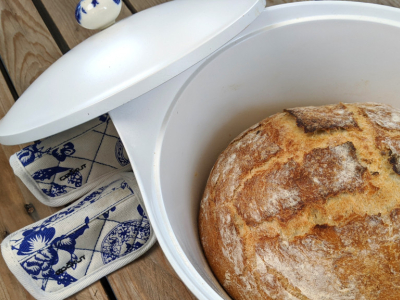
Ceramic casserole dishes are brilliant for gentle oven cooking. They distribute heat and retain moisture perfectly for tender meats, succulent stews, and even great bread!
Advantages and disadvantages of ceramic casseroles
➡️ In summary, ceramic casseroles are :
- Suitable for slow cooking
- Oven-safe
- Non-stick and dishwasher safe
- Shock-resistant
- Not compatible with induction
The Incredible Cocotte from Cookut: cast aluminium and ceramic coating
It took two years of research for us to develop The Incredible Cocotte. With its ceramic coating, aluminium alloy core and thick stainless steel base, it gives you the best of all worlds for your casserole dish:
- Lightweight
- Durable
- Super versatile (compatible with all cooking methods, including induction)
- Easy to clean and maintain
PFAS-free casserole with 100% mineral coating
The Cookut casserole is designed with a mineral coating that is chemical free for safe cooking.
The casserole material is made using a process called vitrification, where sand and water are heated at very high temperatures. This creates a natural, safe material free from any petroleum-based substances. It’s also completely free from harmful chemicals like PFAS, BPA, PTFE, or cadmium.
What's more, its non-stick ceramic coating lets you cook without adding fat. Plus, it's super easy to clean.
Aluminium alloy casserole dish
The aluminium alloy core of the casserole is covered with a mineral coating, ensuring quick and even heat distribution. Plus, it’s versatile, allowing both slow, gentle cooking and faster methods with ease.
Thick stainless steel base
Finally, the thick stainless steel base ensures excellent heating performance on all burners, including induction and oven.
A lightweight, durable casserole
Like natural cast iron, the mineral coating is solid and built to last. It will be with you in the kitchen for decades to come. Combined with its lightness and easy maintenance, it’s a true kitchen must-have!
Discover the Incredible Cocotte
The different materials used for casseroles: a comparison
| Criteria | Cast iron casserole | Stainless steel casserole | Ceramic casserole | The Incredible Cocotte by Cookut |
|---|---|---|---|---|
| Weight | ⚠️ Heavy |
✅ Lightweight |
⚠️ Medium |
✅ Lightweight |
| Induction compatible | ✅ | ✅ | ❌ | ✅ |
| Oven compatible | ✅ | ⚠️ Depending on handle |
✅ | ✅ |
| Heat and distribution | ✅ Excellent |
✅ Rapid |
⚠️ Medium |
✅ Excellent |
| Slow cooking | ✅ | ⚠️ Less suitable |
✅ | ✅ |
| Rapid cooking | ⚠️ Less suitable |
✅ | ⚠️ Less suitable |
✅ |
| Easy to maintain | ⚠️ Hand wash only |
✅ | ✅ | ✅ |
| Dishwasher safe | ⚠️ Not recommended |
✅ | ✅ | ✅ |
| Internal coating | ❌ Not coated |
❌ Not coated |
✅ Natural enamel |
✅ Ceramic coating |
| Durability | ✅ | ✅ | ⚠️ Fragile to shocks |
✅ |
Cast iron casserole Weight: ⚠️ Heavy Induction compatible: ✅ Oven compatible: ✅ Heat and distribution: ✅ Excellent Slow cooking: ✅ Rapid cooking: ⚠️ Less suitable Easy to maintain: ⚠️ Hand wash only Dishwasher safe: ⚠️ Not recommended Internal coating: ❌ Not coated Durability: ✅ Stainless steel casserole Weight: ✅ Lightweight Induction compatible: ✅ Oven compatible: ⚠️ Depending on handle Heat and distribution: ✅ Rapid Slow cooking: ⚠️ Less suitable Rapid cooking: ✅ Easy to maintain: ✅ Dishwasher safe: ✅ Internal coating: ❌ Not coated Durability: ✅ Ceramic casserole Weight: ⚠️ Medium Induction compatible: ❌ Oven compatible: ✅ Heat and distribution: ⚠️ Medium Slow cooking: ✅ Rapid cooking: ⚠️ Less suitable Easy to maintain: ✅ Dishwasher safe: ✅ Internal coating: ✅ Natural enamel Durability: ⚠️ Fragile to shocks The Incredible Cocotte by Cookut Weight: ✅ Lightweight Induction compatible: ✅ Oven compatible: ✅ Heat and distribution: ✅ Excellent Slow cooking: ✅ Rapid cooking: ✅ Easy to maintain: ✅ Dishwasher safe: ✅ Internal coating: ✅ Ceramic coating Durability: ✅
The best material for a lightweight casserole
At Cookut, we believe it's important to combine lightness and versatility in a casserole that performs well and lasts. The 100% mineral ceramic coating and aluminium core of our Incredible Cocotte make it one of the safest choices on the market, and it's available in 4 sizes!
No matter the material you choose, proper care and maintenance are key to ensuring your casserole supports you in the kitchen for years to come. Want to learn how to keep your casserole in top shape? Check out our comprehensive guide: How to Look After Your Casserole Dish.
Bon appétit !