






Investing in good pots and pans is a great first step to setting up a well-equipped kitchen and cooking tasty meals. But to make sure they last, it’s important to know how to take care of them properly.
Here at Cookut, our team has gathered the top tips to help you clean your cookware and even fix a burnt pan, no matter what kind of coating it has.
How to maintain your pots and pans
Clean pans thoroughly to help them last longer
If you want your pots and pans to last, it’s best to avoid harsh cleaning products. Instead, wash them gently by hand using mild, soapy water. For stubborn food stuck to the bottom, simply soak the pan for a few minutes before cleaning.
Top tip: don’t scrub too hard, as that could harm the coating.
Maintaining saucepans to preserve quality
Different cookware materials have specific characteristics, but some general rules apply:
- Never heat your pan for more than 2 minutes when empty.
- Heat gradually and never heat to more than ⅔ of your hob's power (except when boiling water).
- Always use a little fat to protect and preserve the pan’s coating
- Do not cut directly into your pans and use utensils that are suitable for your coating to avoid scratches.
- Dry your pans straight after washing to prevent limescale or rust marks.
Health Risks: Toxic Residues and Worn-Out Coatings
Scratched Teflon®, enamelled ceramic coatings and rusty cast iron pans can release dangerous and harmful particles into your food. This is even more true for PTFE-based non-stick coatings, which are still found in kitchens and contain PFAS.
To be on the safe side:
- Replace any pans with damaged coatings, even if they appear to be in working order.
- Avoid using abrasive or steel wool sponges, as intensive scrubbing will damage your coating.
- Choose high-quality pans from reliable brands that do not contain toxic or controversial substances.
Best cleaning methods for different cookware materials
Cleaning stainless steel pans and pots
Stainless steel is a strong and reliable material, known for its durability and being a safe option for cooking. Its downside is that food can stick to the surface if you don’t handle it carefully while cooking.
Tips for cleaning your stainless steel pans:
Wash with hot soapy water and a soft sponge.
- Use a mixture of baking soda and boiling water on burnt stains rather than scouring pads, as these can scratch the surface over time.
- For tougher stains, try mixing baking soda and white vinegar to make a cleaning paste. Apply the paste to the stain, let it sit for a few minutes, and then scrub gently in circular motions to lift the residue.
- To restore the shine of stainless steel, wipe your pan with a soft cloth soaked in white vinegar.
Cleaning cast iron pans and pots
Cast iron, whether raw or enamelled, is known for being incredibly durable. With proper care, it gets better over time, which is probably why it was a staple in our grandparents' kitchens!
Tips for cleaning your cast iron pans:
- Wash with hot soapy water using a soft sponge or a special dishwashing brush.
- For stubborn stains, scrub your pan with salt and hot water, but avoid using metal sponges.
- Always dry after washing to prevent rust. Also, lightly oil the surface with a soft cloth, ready for the next use.
- Regularly seasoning cast iron will help to maintain it and improve its non-stick properties.
Cleaning non-stick pans and pots
Non-stick coatings, like PTFE, need to be cleaned gently because of their delicate nature.
Tips for cleaning your PTFE (Teflon®) pans:
- Wash with warm, soapy water using a soft sponge. Scouring pads should be avoided.
- Always soak before washing to tackle stubborn stains.
- Never put non-stick pans in the dishwasher
Mineral ceramic non-stick coatings, which don’t contain PFAS or PTFE, are a more natural option. However, they also need to be handled carefully to keep them in good condition.
Tips for cleaning your ceramic-coated pans:
- Wash your pan by hand with warm water and mild washing-up liquid. Use a non-abrasive sponge.
- If there are stubborn stains, soak pans in hot soapy water for a few minutes before scrubbing.
- For tougher stains, mix baking soda and white vinegar to make a cleaning paste. Apply the paste to the stain, let it sit for a few minutes, and then scrub in circular motions to lift the residue.
➡️ Handy hint: always add a little fat before cooking to protect the coating.
How to clean burnt food from a frying pan or saucepan
Burnt casserole dish: what to do?
When the bottom of your casserole is burnt and food is stuck to it, there are several cleaning methods you can use:
- Mix equal parts white vinegar and water, bring it to a boil, and pour it into your pan. Let it sit for a few minutes, and the food residue should wipe away effortlessly.
✨ Add two tablespoons of baking soda to this mixture for maximum results.
- Wood ash is also an effective solution for removing burnt food from a pan. Put a little ash and hot water in the bottom. Scrub with the paste formed, then rinse. Try it!
- Clay stone is another fantastic tip for cleaning burnt pan bottoms. Simply wet your sponge, rub it on the clay stone, and then scrub your pan. Repeat as needed, then rinse with cold water.
- For pans with blackened bottoms, you can also try soaking them in water with salt for an hour or so. After soaking, gently scrub and rinse it clean. Just be careful not to use this method on non-stick pans.
Can you put saucepans in the dishwasher?
When the sink is piled high with dishes or you’re running around in a rush, it’s tempting to throw everything into the dishwasher. However, not all pots and pans are dishwasher-safe.
Dishwasher-safe pans
✅ Stainless steel: Durable and non-porous, stainless steel is dishwasher safe. However, it can tarnish over time. A little white vinegar will restore its beautiful shine!
⚠️ Enamelled cast iron: Generally compatible, but it’s best to check the manufacturer's instructions. It’s a good idea to avoid if the handles are made of wood.
⚠️ Non-stick or ceramic coatings: Some of this cookware is listed as compatible. We still recommend hand washing to preserve the coating for longer.
❌ Cast iron: Not compatible. It rusts easily when exposed to water for long periods.
Care instructions for your everyday pots and pans
Good habits for cleaning your pots and pans are just as important as knowing what to avoid.
To make things easier, here’s a simple summary to keep in mind:
✅ Smart practices to follow
- Avoid thermal shocks: always wait for your pans to cool down before cleaning
- Wash your pans with warm water and a soft sponge.
- Dry immediately after washing to prevent rust or limescale marks.
- Raising the cooking temperature gradually
- Not exceeding ⅔ of the power of your hob.
- Use suitable cooking oil, avoiding extra virgin olive oil.
- Use mild soap or natural products for cleaning.
❌ Mistakes to avoid
- Immediately running your hot pan under cold water.
- Using metal or abrasive sponges.
- Soaking for too long, especially for wooden handles or cast iron.
- Heating an empty pan for too long
- Scraping with metal cutlery or cutting directly in your pan.
- Stacking your pans without protection (risk of scratches)
Storing your pots and pans properly to avoid scratches
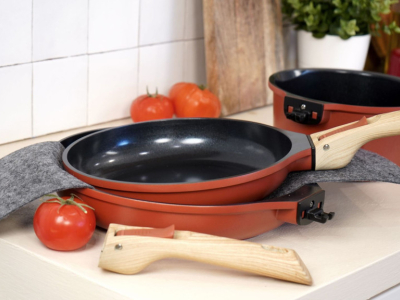
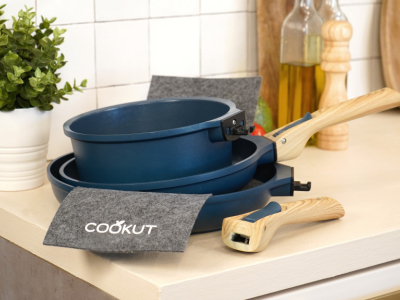
One last tip that’s often overlooked when it comes to keeping your cookware in good shape is proper storage. Stacking your pans directly on top of each other without any kind of protection can cause coatings to wear down faster.
Instead of stacking your pans directly on top of one another, use protective felt sheets to keep them safe. If you don’t have felt pads, you can simply place a piece of soft cloth between each pan.
Choose high-quality pans for easier maintenance
The benefits of durable pots and pans
Choosing quality pots and pans means:
- Making an eco-friendly choice: you will need to replace your utensils less often and therefore generate less waste.
- A better choice for your health: the coatings are non-toxic and free from PFAS and PFOA.
- Reduce cleaning time and effort thanks to high-quality coatings.
Materials designed for durability and easy cleaning
At Cookut, our pans are designed with a tough, non-stick ceramic mineral coating that’s completely free of PFAS chemicals. They also have a lightweight aluminium core, making them easy to use and handle every day. With Cookut, you can enjoy hassle-free, fat-free cooking and simple clean-up that lasts for years!
Cookut pans and saucepans: environmentally friendly, healthy and easy to clean
At Cookut, we care deeply about protecting the environment. We're focused on reducing plastic use, cutting down waste, and putting an end to products that are made to wear out quickly.
That's why we created casserole dishes and saucepans with a safe, healthy coating. They contain no petroleum-based materials, making them completely safe to cook with.
Explore our cookware collection :
- The Fabulous 8-in-1 Frying Pan: replaces all your old frying pans, saucepans, sauté pans, deep fryers, etc.
- The trio of pans with removable handles is a healthy and lightweight starter kit for beginners in the kitchen.
- Discover the entire Incredible range: frying pans, saucepans, woks, even pancake griddles... you're sure to find what you need!
Bon appétit!